

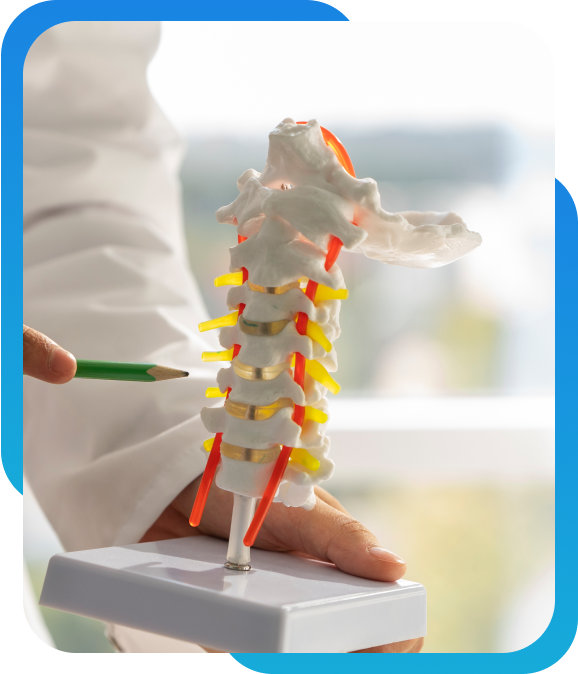
 Overview
  Conditions Treated
  Slip disc / herniated disc
Sciatica & radiating leg pain
Spinal canal stenosis
Spondylolisthesis (slipped vertebra)
Degenerative spine disease
Chronic, treatment-resistant back pain
Our Approach
Slip disc / herniated disc
Sciatica & radiating leg pain
Spinal canal stenosis
Spondylolisthesis (slipped vertebra)
Degenerative spine disease
Chronic, treatment-resistant back pain
Our Approach 
Accurate Mapping
Imaging confirms the precise level and cause of compression.

Small-Portal Surgery
Muscle-sparing access via tubular or percutaneous techniques.
Decompress / Stabilise
Nerves are freed and, if needed, the segment is fixed minimally invasively.
Early Mobilisation
Reduced pain enables rapid walking and rehab.
Benefits 
Smaller Incisions
Less tissue damage and scarring.

Less Blood Loss
Lower surgical risk overall.

Shorter Stay
Reduced hospital time.

Quicker Return
Back to daily activities sooner.
FAQs
Second Opinion Consultation